Wuppertal

City guide

Wuppertal

A valley city shaped by its river and its suspended railway.

At a glance

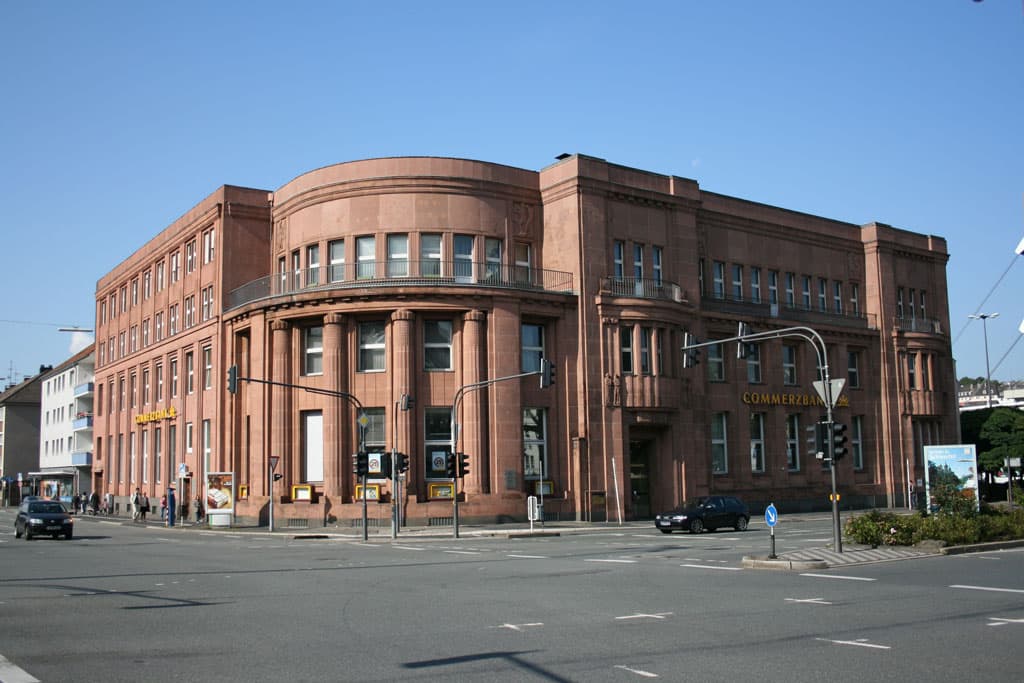
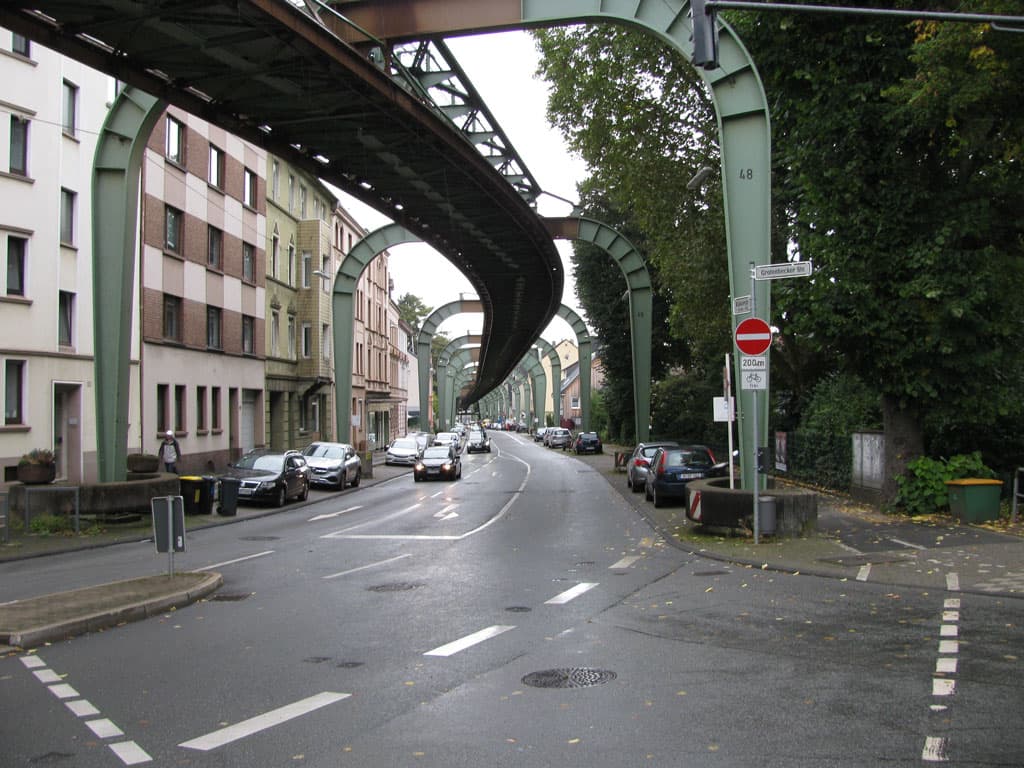
Wuppertal resists easy summary. It runs for roughly twenty kilometres along the narrow, winding valley of the Wupper — a river that gives the city its rhythm and its signature, the Schwebebahn, a suspended railway from 1901 that still glides over the water today. The city was stitched together in 1929 from several independent towns, and their distinct centres — Elberfeld in the west, Barmen in the east — still feel like separate places a tram ride apart.

Wuppertal's character is built on textiles, engineering, and a quiet tradition of progressive culture. Friedrich Engels was born here; Pina Bausch's Tanztheater made Wuppertal a byword in contemporary dance; the Von der Heydt-Museum holds one of Germany's great nineteenth-century collections. Between the old industrial brick and the surrounding forested hills — never more than a short walk from anywhere — Wuppertal is cheaper, greener, and more characterful than its bigger Rhineland neighbours.

For anyone moving here — for a university post, an engineering job, or the simple calculation that rents are half of what you'd pay in Düsseldorf — choosing the right quarter matters. Here is where to look.

Neighborhoods to know

Four quarters, strung along the valley, each with its own rhythm.

Elberfeld
Wuppertal

Elberfeld

The cultural heart, above and below the Schwebebahn

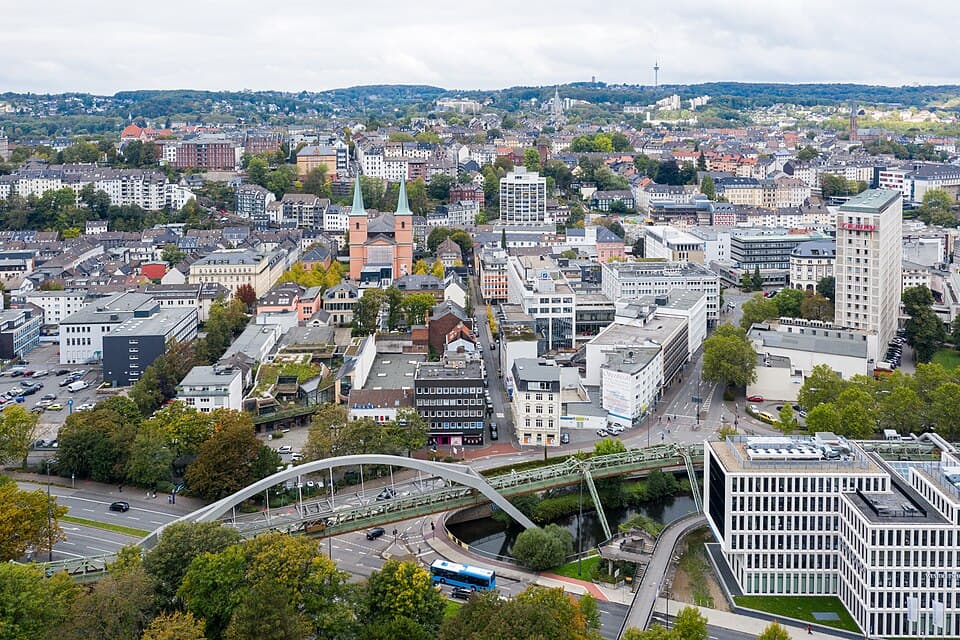
Elberfeld is Wuppertal's western centre and its most urban face. The Döppersberg — rebuilt around the main station a decade ago — opens onto shopping streets, the Schwebebahn gliding overhead, and the Luisenviertel: a tight grid of nineteenth-century townhouses filled with bars, small restaurants, independent bookshops, and the city's best cafés. Laurentiusplatz anchors it all, with its neoclassical church and a Saturday market. Culture sits close by — the Von der Heydt-Museum, the opera, and smaller galleries are all within a short walk.

Who lives here

Students, young professionals, artists, musicians — anyone who wants a short walk to everything and doesn't mind the hum of city life. Rents remain remarkably moderate for what you get.

Highlights

  • Luisenviertel: the cultural quarter, dense with bars, cafés, and galleries
  • Von der Heydt-Museum — one of Germany's great nineteenth-century art collections
  • Laurentiusplatz and Friedrich-Ebert-Straße: the living heart of the neighbourhood
  • Schwebebahn stations Hauptbahnhof and Kluse within the district
Search flatsElberfeld
Briller Viertel
Wuppertal

Briller Viertel

The Gründerzeit villa quarter on the hill

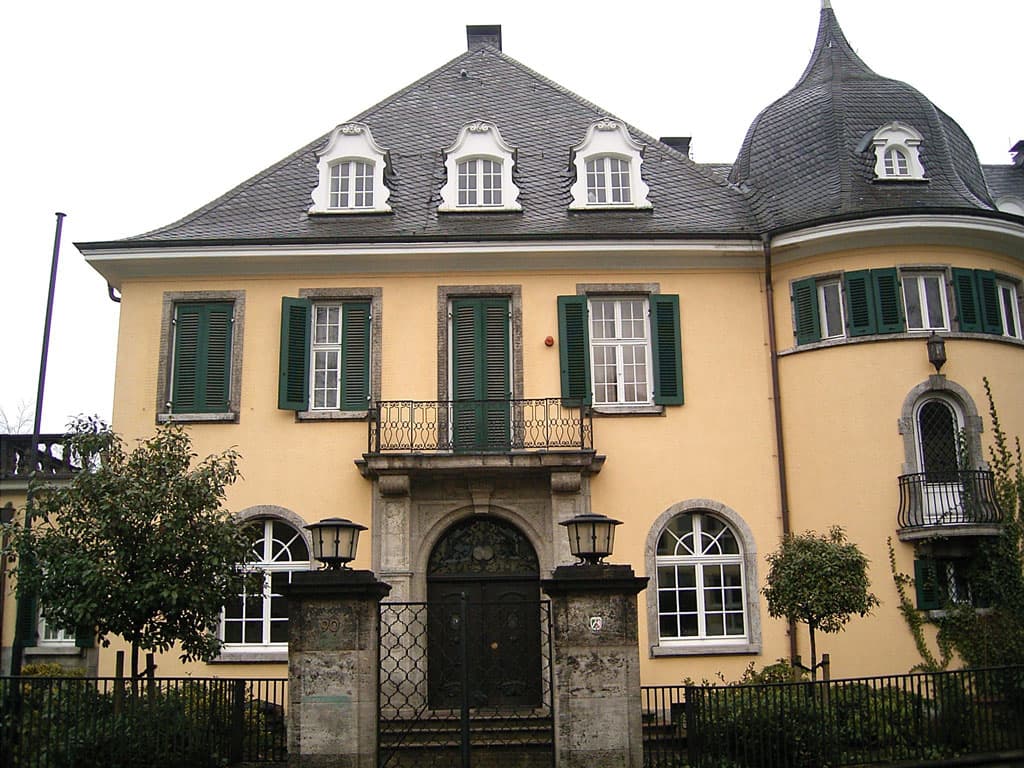
West of the Döppersberg the ground rises into what many consider one of the finest preserved Gründerzeit and Art Nouveau ensembles in Germany. The Briller Viertel is a sloping grid of stucco villas, patrician townhouses, tree-lined streets, and private gardens — largely untouched by the war and sensitively restored since. From certain streets the whole valley opens up below.

Who lives here

Established families, professionals, and anyone who came for the architecture and stayed. Prices here are the highest in Wuppertal, which still means affordable by Düsseldorf or Cologne standards.

Highlights

  • One of Germany's best-preserved ensembles of Gründerzeit and Jugendstil architecture
  • Hillside streets — Platzhoffstraße, Luisenstraße, Briller Straße — lined with villas
  • A twenty-minute walk to the Luisenviertel; five minutes by tram to the main station
  • The Nützenberg and Deweerthscher Garten for forest walks just above the rooftops
Search flatsBriller Viertel
Barmen
Wuppertal

Barmen

The eastern half — with its own Stadthalle to prove it

Barmen was an independent textile city until 1929 and still keeps its own centre of gravity. The Werth — a pedestrianised high street — runs straight through it, crossed overhead by the Schwebebahn. The Historische Stadthalle, a turn-of-the-century concert hall, is widely considered one of the most beautiful in Germany and still hosts the city's classical seasons. The Nordpark climbs the northern flank of the valley, with the Toelleturm crowning the Südhöhen opposite for the big views across the Wupper.

Who lives here

Families, commuters, and longtime Barmer who wouldn't dream of moving to Elberfeld. More relaxed and slightly more suburban in feel, with good independent shops and a cluster of Turkish and Italian restaurants around the Werth.

Highlights

  • Historische Stadthalle — widely regarded as one of Germany's finest concert halls
  • Werth: pedestrianised high street with shops, cafés, and weekly markets
  • Nordpark and the Toelleturm on the Südhöhen — valley views and forest walks
  • The Schwebebahn runs the full length of the district along the Wupper
Search flatsBarmen
Vohwinkel
Wuppertal

Vohwinkel

The Schwebebahn's western terminus — and a town of its own

Vohwinkel sits at the western edge of the city, where the Schwebebahn ends and loops around on a dramatic curve high above the street — a spot that draws railway enthusiasts from across Europe. The old town around the Schwebebahnhof feels like a place apart: a half-timbered core, a Friday flea market that spills into the street, leafy residential blocks, and a genuine small-town feel. Waldorf school, woodland trails, and open country are all close.

Who lives here

Families and anyone who wants a quieter, village-like address with direct transport into the city. One of the most affordable good addresses in Wuppertal.

Highlights

  • Western terminus of the Schwebebahn — the famous Kehrschleife loop
  • Historic old town around Kaiserplatz and the Schwebebahnhof
  • Vohwinkler Trödelmarkt — one of the region's oldest street flea markets, every Friday
  • Direct S-Bahn (S7, S8, S9) and Schwebebahn connections into the city
Search flatsVohwinkel

Find your flat in Wuppertal

Browse furnished flats along the Wupper.

Search flats